

Posterior Cruciate Ligament (PCL) Injury: Diagnosis, Treatment & Recovery in Midtown NYC
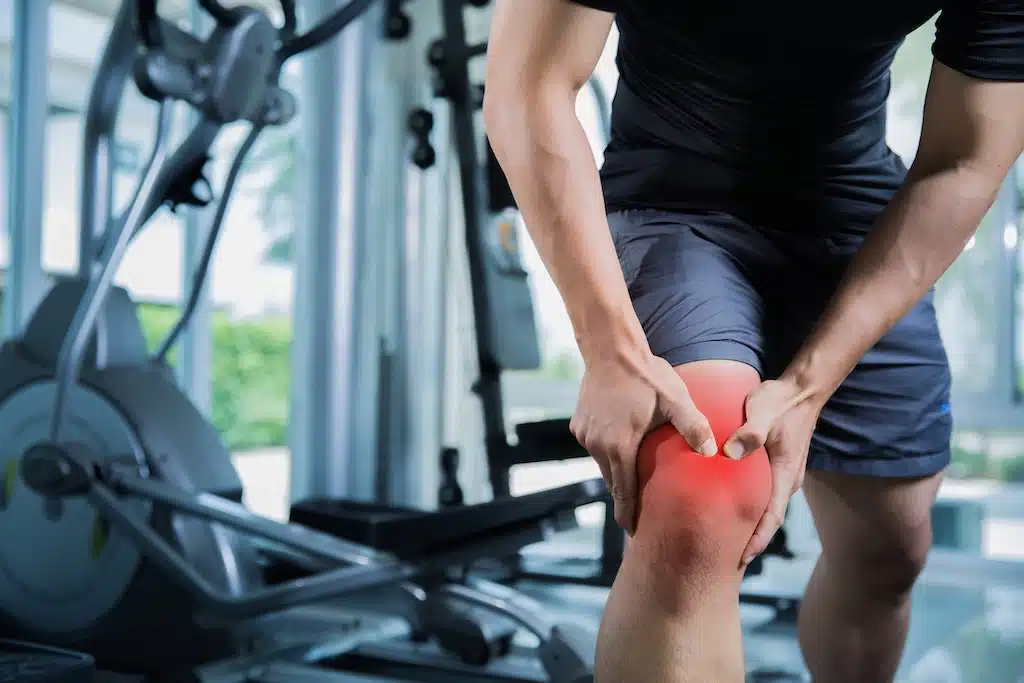
A posterior cruciate ligament (PCL) injury usually comes from real force such as a dashboard collision, a hard fall onto a bent knee, or a violent hit during sports. Because the PCL is the strongest ligament in the knee, an injury to it is often dismissed as "just a bruise," even as swelling and instability quietly set in. At Vitality Health New York, our Midtown chiropractor and team evaluates your knee with a hands-on exam and on-site digital X-ray, then builds a coordinated treatment plan using chiropractic care, physical therapy, medical massage, and acupuncture and with referrals to an orthopedic surgeon when that's the right call. Here's what to know about causes, severity, diagnosis, and recovery.
What Is the Posterior Cruciate Ligament, and Why Does It Matter?
The posterior cruciate ligament sits deep inside the knee joint, connecting the thighbone (femur) to the shinbone (tibia) along the back of the knee. It's roughly the size of your little finger, made of two ligament bundles working together, and it's actually stronger and thicker than its better-known counterpart, the ACL. Its main job is to keep the tibia from sliding backward beneath the femur, which is what gives the knee stability when you bend it while going down stairs, squatting, pivoting, or absorbing impact. When the PCL is stretched or torn, that backward stability disappears, and the knee can start to feel loose, achy, or unreliable even during ordinary movement.
What Causes a PCL Injury?
PCL injuries almost always involve a significant force rather than a simple misstep. Common mechanisms include:
- A direct blow to the front of a bent knee - the classic example is the knee striking the dashboard in a car accident
- Falling hard directly onto a bent knee, such as landing awkwardly during a sport or an accidental slip
- Forceful hyperextension or twisting of the knee during athletic play
- Contact-sport collisions in football, soccer, basketball, skiing, and similar sports
- Landing incorrectly from a jump with the knee absorbing sudden backward stress
Signs You May Have a PCL Injury
Symptoms can be subtle at first, especially with a partial tear, which is why many people wait too long to get evaluated. Watch for:
- Swelling that builds up within hours of the injury
- Pain, especially toward the back of the knee
- A sense that the knee is loose, weak, or about to "give way"
- Stiffness that limits how far you can bend the knee
- Difficulty walking, particularly on stairs or downhill
- Discomfort that lingers with kneeling, squatting, or prolonged standing
How Severe Is It? Understanding PCL Injury Grades
Not every PCL injury is the same, and grading it correctly shapes the entire treatment plan.
Grade 1 is a partial tear where the ligament is stretched but the knee remains largely stable. Grade 2 is also a partial tear, but with more laxity - the tibia shifts backward slightly more than it should when tested. Grade 3 is a complete tear with noticeable instability, and it's frequently accompanied by damage to other knee structures, such as the ACL, meniscus, or posterolateral ligaments.
The encouraging news is that, unlike the ACL, the PCL has a genuine capacity to heal on its own in many Grade 1 and Grade 2 cases with the right conservative care.
How We Diagnose a PCL Injury
Diagnosis starts with a detailed conversation about how the injury happened, followed by a hands-on exam. Checking for posterior sag which is a telltale backward dip of the shinbone, when the knee is bent to 90 degrees. Also range of motion, joint stability, and gait analysis are evaluated. We may also take on-site digital X-rays at our Midtown office, which let us rule out an avulsion fracture (where the ligament pulls a small piece of bone loose) and assess overall joint alignment right away, without a separate imaging appointment. If your exam and X-ray point toward a suspected complete tear, a combined injury, or persistent instability, we'll refer you for an MRI and, when appropriate, a consultation with an orthopedic surgeon to confirm the full assessment before finalizing your treatment plan.
Treatment Options: Conservative Care and Surgical Recovery
Many Grade 1 and Grade 2 PCL injuries respond well to conservative, non-surgical care, since the PCL's blood supply gives it a real chance to heal in place. Our approach typically combines physical therapy focused on quadriceps strengthening, one of the biggest factors in a successful outcome. Chiropractic adjustments to correct the compensations that develop in the knee, hip, and low back. Medical massage to reduce swelling and break up restrictive scar tissue. Acupuncture to help manage pain and inflammation along that occurs with this type of injury. Bracing and a gradual, staged return to activity round out the treatment plan.
Grade 3 tears and injuries involving multiple knee structures often need surgical reconstruction, which we do not perform in our office. In those cases, we work alongside your orthopedic surgeon on both ends of the process: pre-surgical "prehab" to build strength and range of motion before your operation, and structured post-surgical rehabilitation afterward, guided by your surgeon's protocol.
What Recovery Looks Like
Recovery timelines vary quite a bit depending on severity. A mild Grade 1 sprain treated conservatively often improves substantially within a few weeks of focused rehab, while a Grade 2 injury may take six to eight weeks or more of guided strengthening and gradual loading before a safe return to full activity. Surgical PCL reconstruction is a longer road and most patients need six to twelve months to reach full recovery, starting with limited weight bearing and protected range of motion in the first few weeks, followed by progressive strengthening, balance work, and eventually sport or activity specific training before clearance to return to activities. Combined injuries generally take longer to heal than an isolated PCL tear, but with consistent rehab, most patients do well over time.
Reducing Your Risk of a PCL Injury
You can't eliminate risk entirely, especially in a car accident, but a few habits genuinely help. Keeping your quadriceps and hamstrings strong gives the knee better dynamic support when it absorbs impact. Wearing appropriate protective gear for contact sports and driving with your seat positioned so your knees aren't pressed against the dashboard both reduce the odds of the classic injury mechanisms. And if you've had a previous knee injury, getting any lingering instability addressed before returning to high-demand activity lowers your risk of re-injury.
Frequently Asked Questions
- Can a PCL injury heal without surgery?
Often, yes. Because the PCL has better blood supply than the ACL, many Grade 1 and Grade 2 tears heal with focused physical therapy, bracing, and time. We'll monitor your progress and refer you out if surgery becomes the better option. - How is a PCL injury different from an ACL injury?
The PCL controls backward movement of the shinbone, while the ACL controls forward movement and rotation. PCL tears usually require more force to occur, tend to be partial rather than complete, and have a higher chance of healing without surgery than ACL tears. - Do I need an MRI right away?
Not always. We start with a physical exam and may use X-ray to check for a fracture and get an initial assessment on severity. If your findings suggest a complete tear or a combined injury, we'll refer you for an MRI and, if needed, an orthopedic consult. - Does Vitality Health New York accept my insurance?
We accept most major insurance plans. See our Insurance page for details, or call us and we'll help you check your benefits before your first visit.
Get Started With an Evaluation
If your knee has felt unstable, swollen, or not quite right since a fall, collision, or accident, don't wait for it to get worse. Our Midtown team, just steps from Grand Central, will evaluate your knee, get you imaging on-site when needed, and build a treatment plan tailored to your injury and your goals.
Call or Text us at (212) 245-5688