

Neck Sprain Strain Injury
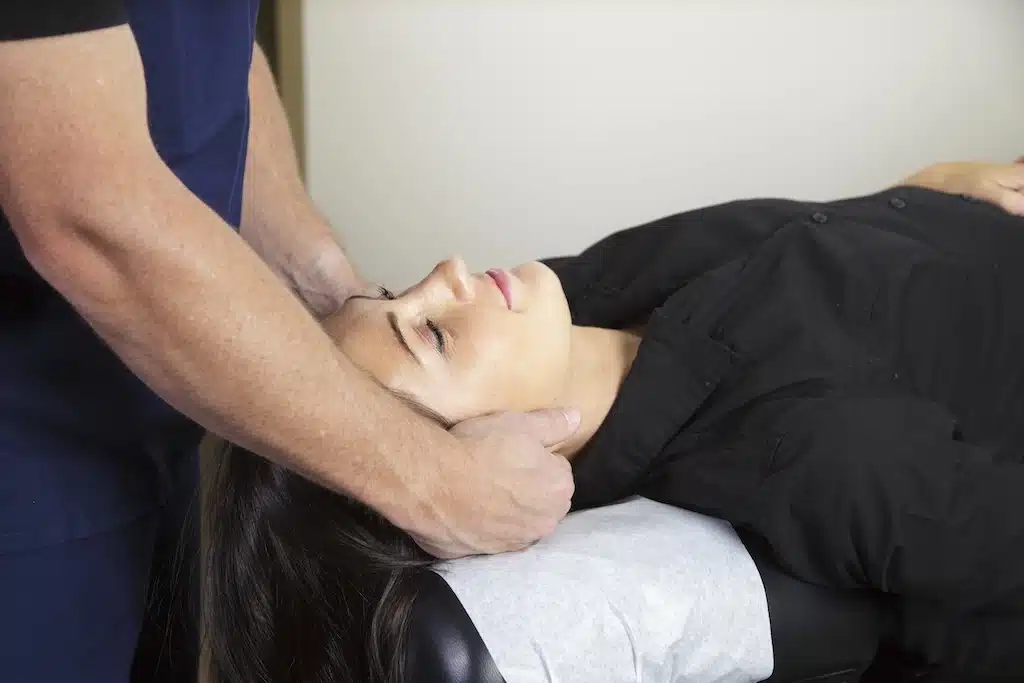
Waking up unable to turn your head, or feeling your neck seize up after a fender-bender or an awkward lift, is one of the most common reasons people come to see us. Neck sprains and strains are usually not serious, but they're rarely comfortable, and treating them the right way from the start makes a real difference in how quickly and how completely you recover.
What's the Difference Between a Sprain and a Strain?
The two terms get used interchangeably, but they describe different tissue:
A strain is an injury to a muscle or the tendon connecting it to bone, usually from being stretched or overloaded. The common culprits in the neck include the sternocleidomastoid (SCM), trapezius, rhomboids, erector spinae, scalenes, and levator scapulae.
A sprain is an injury to a ligament, the tissue connecting the vertebrae themselves. In practice, the two frequently happen together and can be hard to tell apart without an exam, which is why we evaluate and treat them as a combined injury rather than trying to isolate one from the other.
What Causes a Neck Sprain or Strain?
- Prolonged poor posture, especially hunching over a phone or laptop.
- Sleeping in an awkward position.
- Lifting something heavy with poor form.
- Sudden or repetitive twisting motions, including in sports.
- A fall or a direct blow to the head or shoulder.
- A car accident, especially a rear-end collision that whips the head forward and back..
Signs You May Have a Neck Sprain or Strain
- Neck pain, often worse with movement
- Reduced range of motion and difficulty turning or tilting your head
- Muscle tightness, spasm, or stiffness.
- Headaches, especially at the base of the skull.
- Tenderness over specific muscles or along the spine.
Seek immediate medical attention if you experience numbness, weakness, or tingling running down an arm, or any difficulty breathing or swallowing since these aren't typical sprain/strain symptoms and need to be evaluated right away.
How Severe Is It? Understanding the Grades
Grade I - Mild: Some stretching of the muscle or ligament, tenderness, and mild stiffness, but no real loss of stability. Usually resolves quickly with conservative care.
Grade II - Moderate: More noticeable stretching or partial tearing, with more significant pain, swelling, and restricted motion.
Grade III - Severe: A complete tear of the muscle or ligament, with real instability. This is uncommon from everyday causes and typically follows a more significant trauma, such as a serious fall or collision.
How We Diagnose a Neck Sprain or Strain
Most sprains and strains are diagnosed through a hands-on exam: testing your range of motion, checking for muscle spasm and tenderness, and screening for any signs of nerve involvement. If your injury involved real trauma such as a car accident, a fall, a direct blow we'll take an on-site digital X-ray to rule out a fracture before starting treatment. If your exam shows red flags like nerve symptoms or signs of instability, we'll refer you out for an MRI or a specialist consult; surgery is almost never needed for a straightforward sprain or strain, but we'll get you to the right person quickly if your case is beyond what we provide at our office.
Treatment Options
For the large majority of neck sprains and strains, treatment is chiropractic-led and conservative:
- Chiropractic adjustments to restore normal motion to joints that have tightened up around the injury.
- Myofascial release and soft tissue work to release the muscle spasm and tightness that comes with a strain.
- Therapeutic exercise to rebuild strength and stability so the same movement pattern doesn't cause a repeat injury.
- Medical massage and acupuncture to help manage pain and muscle tension as you heal.
- Activity and posture modification while the tissue recovers, followed by a gradual return to normal activity.
For the rare Grade III injury or a case involving significant trauma, we coordinate with an orthopedic specialist and build your rehabilitation plan around whatever they recommend.
What Recovery Looks Like
Most Grade I sprains and strains improve substantially within a few days to two weeks with proper care. Grade II injuries typically take several weeks, with a more gradual return to full activity. Recovery timelines vary based on how promptly treatment starts and how consistently a rehab plan is followed. This is part of why we don't recommend just waiting it out at home if pain and stiffness aren't improving on their own.
Preventing Neck Strain and Sprain
- Maintain good posture, especially during long stretches at a desk or on a phone.
- Keep your neck and upper back muscles conditioned with regular strength and flexibility work.
- Adjust your car headrest properly to reduce whiplash risk in a collision.
- Use proper form when lifting, and avoid sudden, forceful neck movements.
- Set up your workstation so your screen is at eye level rather than looking down.
Get Started With an Evaluation
If your neck is stiff, painful, or hard to move after an accident, a fall, or even just waking up wrong, our Midtown team can evaluate what's going on and get you moving again.