

MCL & LCL Injuries: Diagnosis, Treatment & Recovery in Midtown NYC
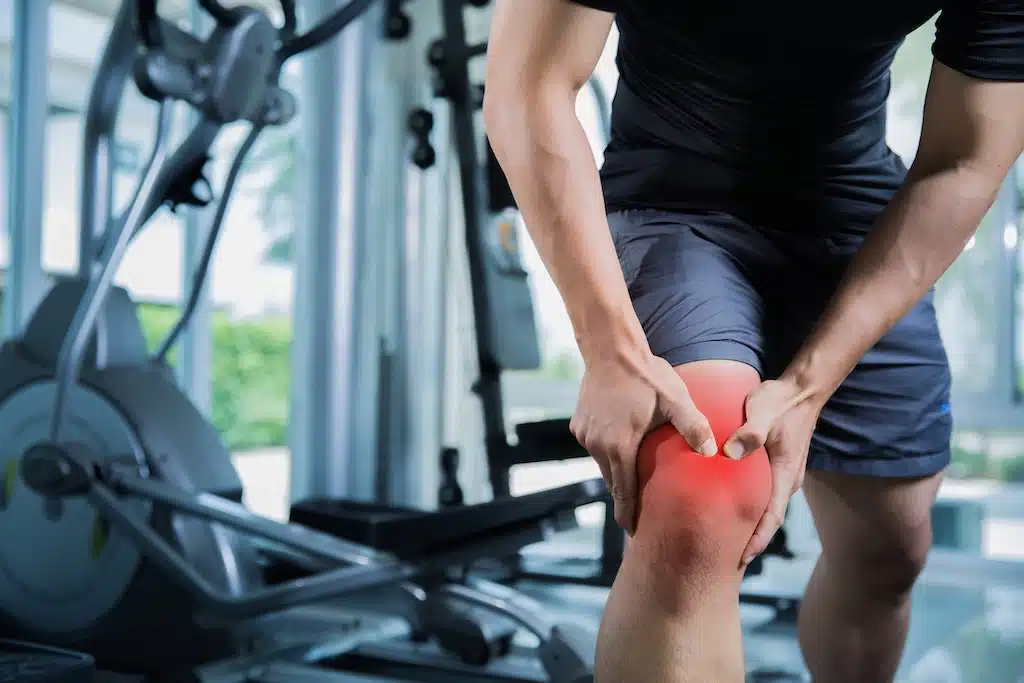
A sideways hit to the knee, a bad landing, or an awkward twist can stretch or tear one of the ligaments that keep your knee from buckling inward or outward. The medial collateral ligament (MCL) and lateral collateral ligament (LCL) are among the most commonly injured knee structures, especially among athletes and active New Yorkers. Below, we cover what causes these injuries, how to recognize one, how we diagnose and grade them, and the treatment path — conservative or surgical — that gets you back on your feet.
What Are the MCL and LCL, and Why Do They Matter?
The MCL runs along the inner side of your knee, connecting your thighbone (femur) to your shinbone (tibia). The LCL runs along the outer side, connecting the femur to the fibula. Together, these ligaments act like guy-wires, similar to ropes holding and securing a ships sail or masts. These control side-to-side motion and keeping the knee stable when it's pushed inward or outward. When one of these ligaments is overstretched or torn, the knee can feel loose, painful, or unsteady under weight, especially during pivoting or when on uneven ground.
What Causes an MCL or LCL Injury?
MCL and LCL injuries almost always come from a sideways force, but the two ligaments are typically injured in opposite ways:
- MCL injuries usually result from a inward-bending, called a valgus force. This most often is from a direct blow to the outside of the knee and is common in contact sports such as football, soccer, and hockey.
- LCL injuries result from a outward-bending force, called a varus force, which is a blow to the inside of the knee, pushing it outward. LCL injuries occur less frequently than MCL injuries.
- Sudden pivoting or movements during sports can also result in these types of injuries.
- Hyperextension of the knee, which is common in skiing falls.
- Awkward landings after a jump or direct-contact collisions is another mechanism of injury.
- Repetitive stress in athletes who train heavily on their legs sometimes are prone to LCL and MCL injuries.
The MCL has a strong blood supply and is injured more often, but usually heals well on its own. The LCL is injured less often, but when it is hurt, it's more likely to occur alongside damage to another ligament, such as the ACL.
Signs You May Have Injured Your MCL or LCL
- Pain along the inner (MCL) or outer (LCL) side of the knee
- A popping sound or sensation at the moment of injury
- Swelling, bruising, and tenderness over the injured ligament
- A feeling that the knee is loose, unstable, or "giving way"
- Difficulty bearing full weight or walking without a limp
- Stiffness or a locking/catching sensation with movement
How Severe Is It? Understanding Collateral Ligament Injury Grades
Like other knee ligament sprains, MCL and LCL injuries are classified on a three-grade scale based on how much of the ligament is damaged:
- Grade 1 (mild): Ligament fibers are stretched with minor damage. The knee stays stable, with mild pain and tenderness.
- Grade 2 (moderate): A partial tear. The ligament is loosened, causing noticeable pain, swelling, and some instability with side-to-side stress.
- Grade 3 (severe): A complete tear or rupture, sometimes pulled off the bone entirely. The knee feels significantly unstable, and Grade 3 tears are frequently accompanied by damage to another ligament, such as the ACL.
How is an MCL or LCL Injury Diagnosed
Our providers begin with a thorough history and hands-on exam, gently stressing the knee at different angles to identify which ligament is involved and estimate the grade. X-ray lets us quickly rule out a fracture or bone avulsion that can mimic or accompany a ligament sprain. If your exam suggests a complete tear, a combined-ligament injury, or an unclear diagnosis, we'll refer you for an MRI and when appropriate, an orthopedic surgical consult before finalizing your treatment plan.
Treatment Options: Conservative Care and Surgical Recovery
The good news is that most MCL injuries and many Grade 1–2 LCL injuries heal well without surgery. Our conservative care plans typically combine physical therapy to restore motion and strength, chiropractic care to support joint mechanics along the kinetic chain, medical massage to reduce swelling and muscle guarding, and acupuncture to help manage pain. Bracing and a gradual, staged return to activity round out the plan.
Higher-grade LCL injuries, complete tears, and multi-ligament injuries sometimes require surgical repair or reconstruction. We don't perform surgery, but we support you on either side of it: prehab to strengthen the knee beforehand, and post-surgical rehab coordinated with your orthopedic surgeon to safely rebuild motion, strength, and stability once you're cleared for therapy.
What Recovery Looks Like
Recovery varies by ligament and grade. A Grade 1 MCL sprain often improves in 1 to 3 weeks, a Grade 2 tear in 4 to 6 weeks of guided rehab, and a Grade 3 tear in 6 weeks or longer when treated conservatively. LCL injuries tend to run longer: Grade 1 tears often resolve in 3 to 4 weeks, while Grade 2 and 3 injuries frequently take 8 to 12 weeks, longer still with surgery. We track milestones like pain-free motion, walking without a limp, and regained strength before clearing you for higher-demand activity. Rushing this process is a common cause of re-injury.
Frequently Asked Questions:
Can an MCL or LCL tear heal without surgery?
Yes, in most cases. The MCL especially has a strong blood supply and heals well with bracing, physical therapy, and structured rehab. Surgery is generally reserved for complete or multi-ligament tears.
How do I know if it's my MCL or my LCL?
Pain location is the biggest clue - inner knee pain points to the MCL, outer knee pain to the LCL - a proper diagnosis requires a hands-on stability exam. We're happy to evaluate you and explain what we find.
Will I need an MRI right away?
Not necessarily. Many mild to moderate sprains can be diagnosed clinically and treated conservatively without imaging beyond standard X-ray. We reserve MRI referrals for suspected complete tears or unclear findings.
Does insurance cover treatment for a knee ligament injury?
We accept most major insurance plans. See our Insurance page for details, or call us and we'll help you check your benefits before your first visit.
Get Started With an Evaluation
If you've hurt your knee and suspect an MCL or LCL injury, don't wait to get it checked out An accurate early diagnosis makes a real difference in how quickly you recover. Our Midtown Manhattan team, just steps from Grand Central, offers physical therapy, chiropractic care, sports medicine, acupuncture, medical massage, all coordinated under one roof.
Call or Text us at (212) 245-5688