

Lumbar Disc Bulge and Herniations
What are Disc Injuries?
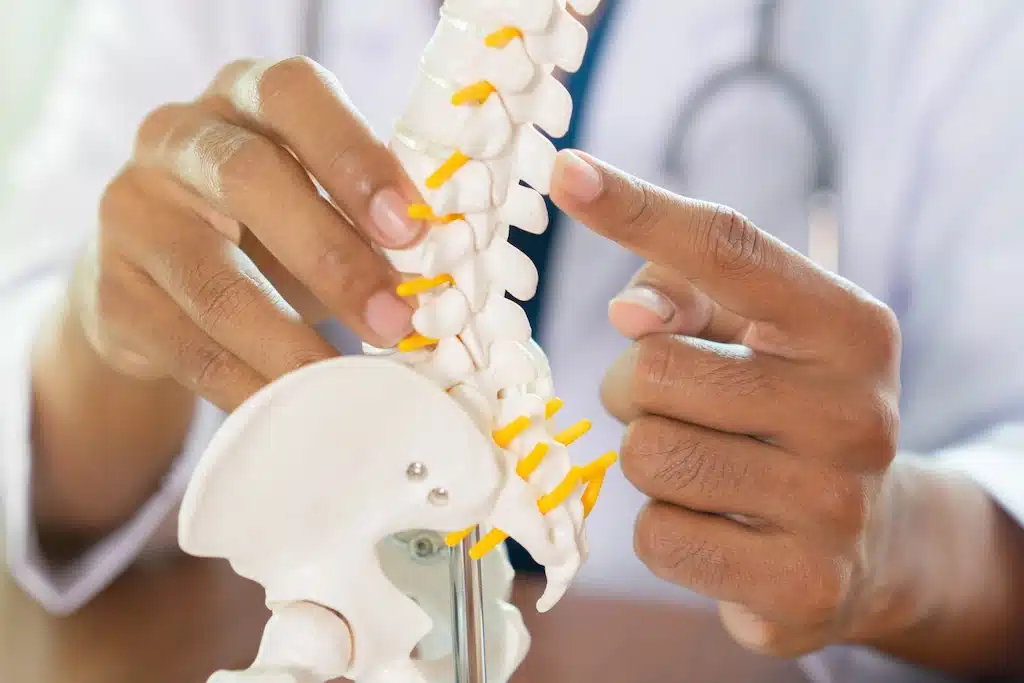
The bones (vertebrae) that form the spine in your back are cushioned by small, spongy discs. When these discs are healthy, they act as shock absorbers for the spine and keep the spine flexible. But when a disc is damaged, it may bulge or break open.
When this occurs in the low back or lumbar spine it is known as a lumbar disc bulge. It may also be called a slipped or ruptured disc.
You can have a herniated disc in any part of your spine. But most herniated discs affect the lower back (lumbar spine). Some happen in the neck (cervical spine) and, more rarely, in the upper back (thoracic spine). This topic focuses mainly on the lower back.
What causes a herniated disc?
A herniated disc may be caused by:
* Wear and tear of the disc. As you age, your discs dry out and aren’t as flexible.
* Injury to the spine. This may cause tiny tears or cracks in the hard outer layer of the disc. When this happens, the gel inside the disc can be forced out through the tears or cracks in the outer layer of the disc. This causes the disc to bulge, break open, or break into pieces
What are the symptoms?
When a herniated disc presses on nerve roots, it can cause pain, numbness, and weakness in the area of the body where the nerve travels. A herniated disc in the lower back can cause pain and numbness in the buttock and down the leg. This is called sciatica and it is the most common symptom of a herniated disc in the low back
Sometimes tests such as an MRI scan or NCV (Nerve Conduction Velocity) may be used to confirm a herniated disc.
Our chiropractor Dr. Neel Kumar will examine you and provide a diagnosis and treatment plan designed for you to begin your journey to wellness.
Call or Text Us Today at (212) 245-5688