

Golfer’s Elbow Treatment in NYC
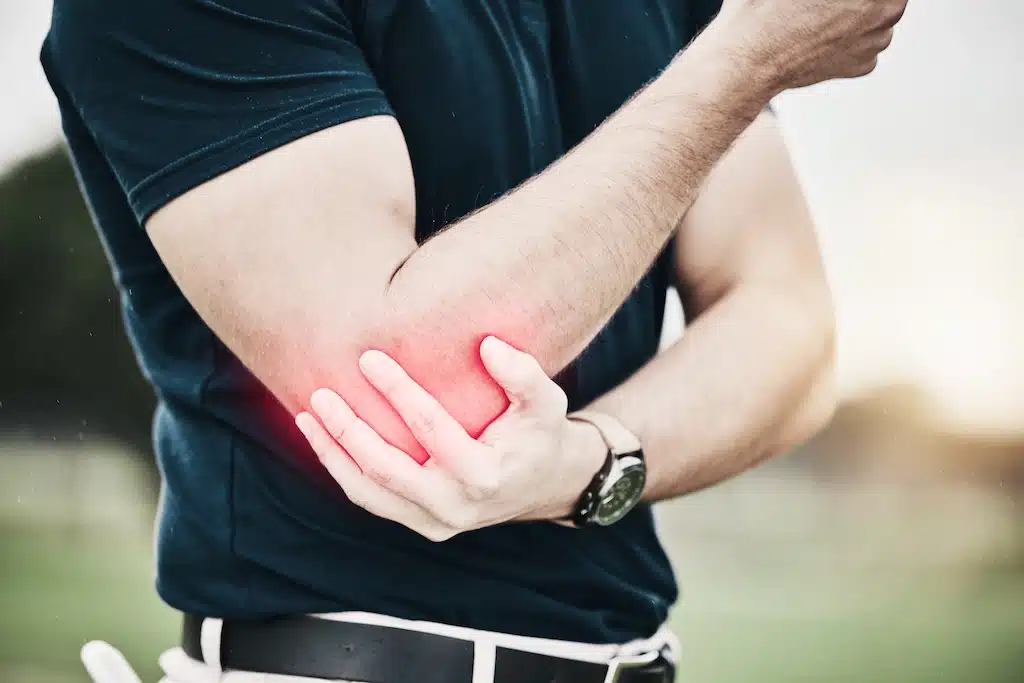
What is Golfer's Elbow?
Golfer's elbow, or medial epicondylitis, is a condition that causes pain and inflammation in the tendons that connect the forearm muscles to the elbow. The pain centers on the bony bump on the inside of your elbow (the medial epicondyle) and may radiate into the forearm.
Golfer's elbow is a type of tendinitis and is usually caused by overusing the muscles in the forearm that allow you to grip, rotate your arm, and flex your wrist. Repetitive flexing, gripping, or swinging can cause pulls or tiny tears in the tendons.
This condition doesn't just affect golfers. Any repetitive hand, wrist, or forearm motion can lead to golfer's elbow, including using tools such as screwdrivers and hammers, throwing sports, and everyday gripping or typing.
Golfer's Elbow vs. Tennis Elbow
Golfer's elbow (medial epicondylitis) affects the inside of the elbow; tennis elbow (lateral epicondylitis) affects the outside. Both involve overused forearm tendons on opposite sides of the joint, and both respond to a similar conservative treatment approach.
Symptoms
- Pain or tenderness on the inside of the elbow, often worse in the morning
- Pain that may radiate into the forearm and wrist
- Weak grip strength, or pain when making a fist or shaking hands
- Pain that worsens with wrist flexion, gripping, or forearm rotation
- Stiffness in the elbow, especially first thing in the morning
In some cases, the ulnar nerve, which runs just behind the inside of the elbow, becomes irritated alongside the tendon. This can cause numbness or tingling specifically in the ring and pinky fingers, distinct from the tendon pain itself. Let your provider know if you notice this, since it may call for a slightly different evaluation.
How We Diagnose It
Diagnosis is largely clinical: our doctors examine your elbow's range of motion and use orthopedic tests, such as resisted wrist flexion and forearm pronation. This reproduces pain at the medial epicondyle to confirm golfer's elbow. We also check the ulnar nerve directly (tapping over the nerve to check for tingling, and testing hand/finger sensation and strength) to rule out concurrent nerve irritation. Imaging usually isn't needed, though on-site digital X-ray is available if we need to rule out another cause of your elbow pain.
Treatment for Golfer's Elbow
Conservative care resolves the large majority of golfer's elbow cases. Depending on your evaluation, your treatment plan may include:
- Chiropractic adjustments to the elbow, wrist, and cervical spine to restore proper joint mechanics and take stress off the irritated tendon
- Soft tissue therapy, including myofascial release and instrument-assisted techniques, to reduce adhesions and improve blood flow to the tendon
- Eccentric strengthening exercises - controlled, lengthening contractions of the wrist flexors which is one of the most effective ways to help remodel damaged tendon tissue
- Bracing or a counterforce strap to offload the tendon during daily activity
- Acupuncture as a drug-free option for pain relief
- Activity modification to reduce the repetitive strain driving your symptoms while you heal
Many patients notice improvement within a few weeks of consistent care, though full healing of the tendon can take several months. If pain persists despite months of appropriate conservative treatment, or if nerve symptoms progress, referral for further evaluation may be appropriate, but this is uncommon.
Frequently Asked Questions
Do I have to play golf to get golfer's elbow? No, most people with golfer's elbow don't play golf. Any repetitive gripping, flexing, or wrist motion, at work or during other activities, can cause it.
What's the difference between golfer's elbow and tennis elbow? Golfer's elbow affects the inside of the elbow; tennis elbow affects the outside. Otherwise, the causes and conservative treatment approach are very similar.
Can a chiropractor help with golfer's elbow? Yes. Joint mobilization, soft tissue work, and guided eccentric exercise are a well-supported, non-invasive approach and often avoiding the need for cortisone injections or surgery.
I have numbness in my ring and pinky finger, is that normal? That pattern can point to irritation of the ulnar nerve alongside the tendon, which is common but worth mentioning at your visit so it can be evaluated specifically.
We can help you recover from your sport-related or repetitive-strain injury so you can get back to what you enjoy.
Call or Text us Today for an Evaluation
(212) 245-5688